
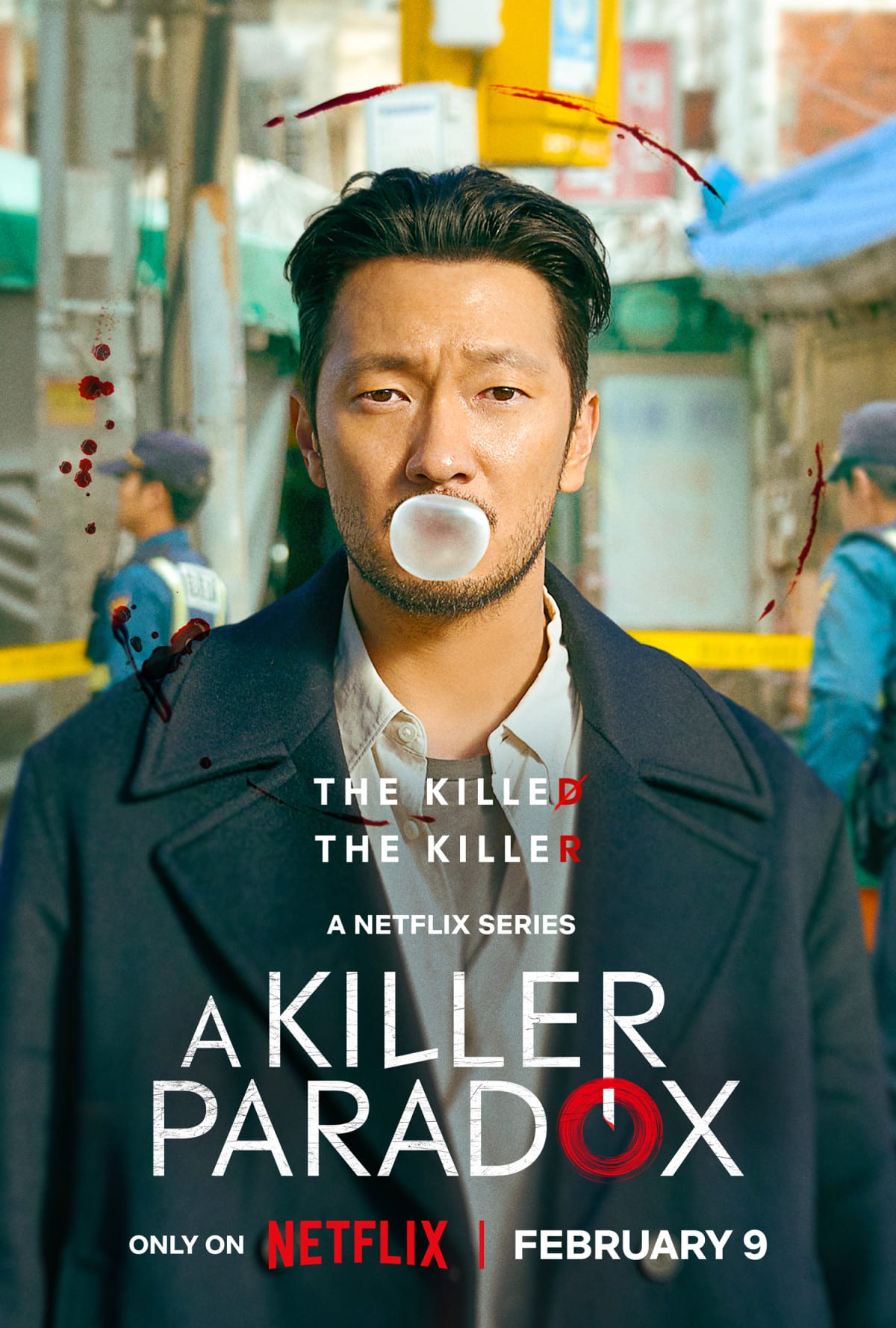
Hello, everyone! How’s everything? Today, I’m excited to share my thoughts on the drama A Killer Paradox, which has emerged as one of Netflix’s most intriguing and ethically complex K-dramas of 2024. This psychological thriller invites viewers on a convoluted journey where an unintentional homicide propels an average college student into an unexpected role as a vigilante.
Advertisements
A Killer Paradox debuted on Netflix on February 9, 2024, consisting of 8 gripping episodes, each with an approximate duration of 60 minutes. Directed by Lee Chang-hee (Hell Is Other People, The Villainess) and penned by Kim Da-min, this series is inspired by the Naver webtoon “Sarinjaonnangam” by Kkomabi. The show unfolds as a darkly comedic morality thriller that challenges the audience’s understanding of justice, fate, and the delicate boundary between heroism and crime.
The narrative centers on Lee Tang, an average college student juggling a part-time job at a convenience store, whose existence is irrevocably altered after a moment of impulsiveness results in an accidental murder. What distinguishes A Killer Paradox from other crime dramas is its examination of moral ambiguity and the notion of “justifiable” killing. The series refrains from offering straightforward answers about right and wrong, compelling viewers to evaluate their own moral standards as the protagonist uncovers a peculiar ability to recognize genuinely malevolent individuals.
Lee Tang’s Transformation: The Accidental Vigilante
The story kicks off with what seems like a straightforward incident: Lee Tang (Choi Woo-shik) finds himself in a dispute with a difficult customer during his late-night shift at the convenience store. In a fit of anger, he inadvertently kills the man using a hammer. However, A Killer Paradox swiftly discloses that his victim was, in fact, a serial killer, establishing the core moral conflict that propels the entire narrative.
As Lee Tang confronts his actions, he begins to observe a troubling trend: the individuals who provoke his violent reactions are often criminals themselves. This realization leads him down a dark path where he starts to suspect he possesses an extraordinary ability to discern evil people. The series expertly intertwines dark humor with authentic psychological horror as Lee Tang evolves from a drifting student into someone who perceives himself as a vehicle of justice.
Choi Woo-shik as Lee Tang: The Unwilling Anti-Hero
Choi Woo-shik offers a career-defining portrayal as Lee Tang, demonstrating a range that extends far beyond his celebrated role in Parasite. His depiction of an everyday young man gradually succumbing to vigilante tendencies is both captivating and unsettling. A Killer Paradox provides Choi Woo-shik with the opportunity to delve into the psychological intricacies of a character who believes he is acting for good while engaging in horrific deeds.
Throughout the series, we witness Lee Tang’s transformation from a rudderless college student to someone who genuinely thinks he has been selected to eradicate evil from the world. Choi Woo-shik skillfully embodies the character’s internal conflict between his increasing assurance in his “mission” and the persistent uncertainty about whether he is becoming the very thing he aims to eliminate. His performance elicits both sympathy and apprehension from viewers, resulting in an unsettling viewing experience that reflects the show’s brilliant writing.
Son Suk-ku as Detective Jang Nan-gam: The Tenacious Pursuer
Son Suk-ku brings fervor and intellect to his role as Detective Jang Nan-gam, the astute investigator resolved to apprehend Lee Tang. His character acts as both the antagonist and the moral compass of A Killer Paradox, symbolizing traditional justice and the law. The cat-and-mouse relationship between Detective Jang and Lee Tang constitutes the compelling framework of the series.
What renders Son Suk-ku’s performance particularly impactful is his portrayal of a detective whose obsession with solving the case leads him to employ questionable tactics. The series investigates how the quest for justice can corrupt even those who uphold the law, creating an intriguing parallel between hunter and hunted. The chemistry between Son Suk-ku and Choi Woo-shik generates some of the most intense moments in recent K-drama history.
When Justice Gets Personal: The Moral Crossroads
The series reaches its peak intensity when Lee Tang’s choices start to impact innocent people in his vicinity and Detective Jang’s investigation inches closer. A Killer Paradox does not shy away from depicting the collateral damage caused by vigilante actions, challenging both characters and viewers to face the real consequences of taking justice into their own hands.
The pivotal moment arises when Lee Tang must determine whether to persist with his mission, aware that it will jeopardize the lives of those he cherishes, while Detective Jang confronts his own ethical dilemma regarding how far he will go to capture his suspect. These scenes highlight the series’ strength in creating authentic moral complexity without providing easy answers or clear heroes and villains.
The Consequential Web
Lee Hee-joon and the ensemble cast, including colleagues from the convenience store, members of the police force, and various suspects, all contribute to the intricate web of moral ambiguity that characterizes A Killer Paradox. Each character plays a role in examining various facets of justice, guilt, and the repercussions of violence.
The series particularly excels in illustrating how Lee Tang’s actions reverberate outward, impacting not only his direct victims but everyone associated with them. The supporting characters frequently serve as reflections, showcasing different potential paths that Lee Tang could have chosen and alternative reactions to trauma and injustice that do not involve murder.
Netflix Success: Critical Praise and Debate
A Killer Paradox has received notable critical acclaim on Netflix, with Rotten Tomatoes reflecting an impressive 100% critic score and an average rating of 7.2/10. Critics have lauded the series for its unwillingness to present easy moral solutions, although some viewers have found its dark themes challenging. The show’s structure of eight hour-long episodes permits thorough character development while sustaining the psychological intensity that renders the series so captivating. A Killer Paradox has been acknowledged as one of the standout series on Netflix, particularly highlighting Choi Woo-shik’s dramatic versatility and the series’ unique take on vigilante narratives.
A Morally Intricate Masterpiece Worth Exploring
If you enjoy psychological thrillers that question your moral beliefs and refuse to deliver comforting answers regarding justice and retribution, A Killer Paradox is an excellent series to binge-watch on Netflix. This isn’t merely entertainment; it’s a thought-provoking examination of the consequences when ordinary individuals take justice into their own hands.
Why This Dark Treasure Deserves Your Focus
A Killer Paradox thrives because it does not romanticize vigilante justice while recognizing the frustrations that lead individuals to contemplate it. The series compels viewers to scrutinize their own perspectives on justice, punishment, and whether the ends can ever truly justify the means. It’s a series that will ignite conversations long after you’ve completed watching, prompting you to question not only the characters’ decisions but the essence of justice itself.
Series Overview
Number of Episodes: 8 (Complete Season)
Platform: Netflix
Release Year: 2024
Current IMDb Rating: 7.8/10
Genre: Psychological Thriller, Crime Drama, Dark Comedy
Status: Season 1 Complete (Potential for more seasons)
Main Protagonists: Choi Woo-shik (Lee Tang), Son Suk-ku (Detective Jang Nan-gam)
Antagonist: The moral ambiguity of vigilante justice itself