
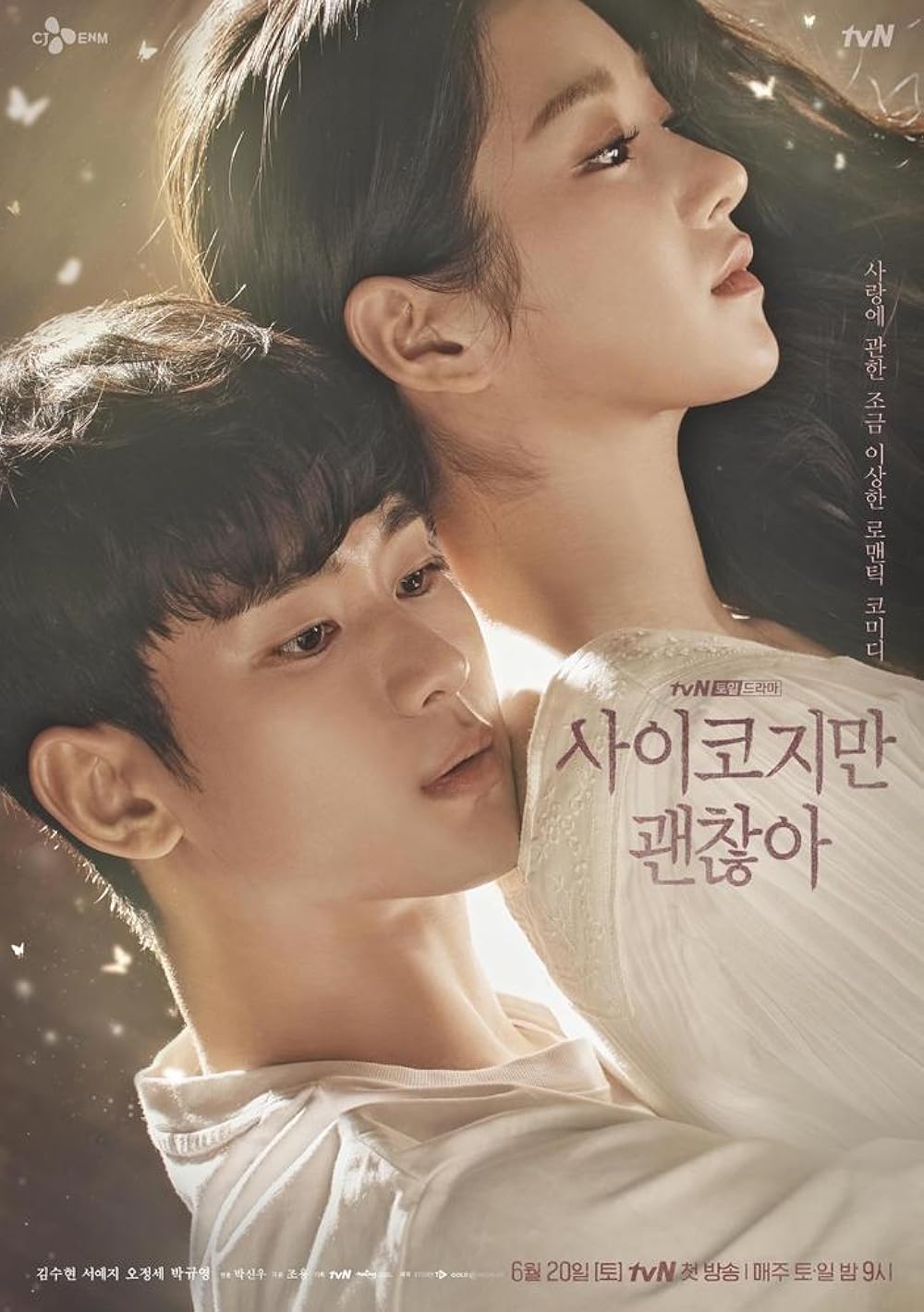
Hello, everyone! How’s everything? Today, I’m excited to share my thoughts on the drama It’s Okay to Not Be Okay, which has truly transformed the landscape of K-dramas by addressing mental health and emotional recovery in an innovative way.
Advertisements
It’s Okay to Not Be Okay debuted on June 20, 2020, featuring 16 episodes of about 60 minutes each, airing weekly on Saturdays and Sundays over a span of eight weeks. Available globally on Netflix, this series diverges from the standard romantic comedy-drama format. It tells the story of Ko Moon-young, an antisocial author of children’s books who returns to her hometown to pursue her love interest, Moon Gang-tae, a caretaker in a psychiatric ward, who has devoted his life to caring for his autistic elder brother, Moon Sang-tae.
What distinguishes this drama is its courageous approach to depicting mental health issues and neurodiversity. Instead of skimming over tough subjects, it delves deeply into trauma, healing, and the intricate nature of unconventional relationships. By blending fairy tale elements with psychological insights, it offers a viewing experience that is visually captivating and emotionally rich.
An Author with Hidden Depths
Ko Moon-young (Seo Ye-ji) is an antisocial children’s book author whose character extends well beyond the usual “cold female lead” stereotype. Her journey throughout the series uncovers layers of trauma and emotional barriers formed during childhood. Moon-young’s transformation from someone who appears to lack empathy to realizing her ability for genuine love and compassion serves as the emotional core of the series.
Her character embodies those who have been labeled as “challenging” or “antisocial” by society, yet the drama carefully unravels these labels to reveal the vulnerable person within. The way she learns to navigate her relationships and embrace vulnerability makes her one of the most engaging female leads in K-drama history.
Moon Gang-tae: The Caregiver Who Lost Himself
Moon Gang-tae (Kim Soo-hyun) is a caretaker in a psychiatric ward who has committed his life to supporting his autistic older brother, Moon Sang-tae. His character arc revolves around the realization that caring for others must not come at the cost of neglecting his own emotional well-being and aspirations.
Gang-tae’s journey involves breaking free from the self-imposed confines of being solely recognized as a caregiver. His bond with Moon-young compels him to face his own trauma and understand that seeking healing is not an act of selfishness. The chemistry between Kim Soo-hyun and Seo Ye-ji creates a dynamic tension that propels the entire story forward.
Moon Sang-tae: A Character with Depth
Oh Jung-se delivers a remarkable performance as an autistic character, infusing Moon Sang-tae with depth and authenticity that transcends stereotypes. His character’s growth from one who requires constant protection to embracing independence and aspiring to be the “big brother” offers some of the series’ most heartwarming moments.
Sang-tae’s artistic abilities and unique perspective enrich the narrative. His connections with both his brother and Moon-young foster a beautiful found family dynamic that challenges conventional definitions of relationships.
When Past Wounds Intersect with Present Healing
The series reaches its emotional climax as the intertwined past traumas of the three main characters are revealed. Without giving away any spoilers, the narrative skillfully interweaves childhood experiences that have shaped each character’s psychological landscape. This convergence compels everyone to confront their inner demons and decide between remaining ensnared by the past or embracing the potential for healing.
The climactic episodes do not rely on conventional dramatic devices but instead highlight the internal struggles each character faces. It is a testament to the writing that the most impactful moments arise from intimate conversations and emotional revelations rather than external conflicts.
A Hit on Netflix
The series achieved remarkable viewership ratings and became the most popular show of 2020 in South Korea. Its success on Netflix introduced global audiences to a new style of K-drama storytelling. It’s Okay to Not Be Okay emerged as a cultural phenomenon, igniting crucial discussions about mental health representation in media. The show’s fairy tale-inspired visuals, coupled with profound themes, provided a unique viewing experience that resonated with audiences around the world.
An Exquisite Example of Emotional Narration
If you appreciate narratives about healing, found family, and unconventional romance, It’s Okay to Not Be Okay is an ideal series to binge-watch on Netflix. It’s a show that not only entertains but also profoundly influences how viewers perceive mental health, relationships, and personal growth.
Why This Series Will Resonate with You Forever
Throughout the series, viewers observe how the three protagonists help heal each other’s emotional scars from their traumatic pasts, illustrating a beautiful tale of friendship and love. It’s Okay to Not Be Okay demonstrates that the most meaningful love stories go beyond romance, highlighting how individuals can support one another in becoming the best versions of themselves, imperfections included.
Series Overview
Number of Episodes: 16 (Completed) Platform: Netflix Release Year: 2020 IMDb Rating: 8.6/10 Genre: Romantic Comedy-Drama, Psychological Status: Completed series Main Characters: Kim Soo-hyun (Moon Gang-tae), Seo Ye-ji (Ko Moon-young), Oh Jung-se (Moon Sang-tae) Antagonist: Past trauma and societal expectations (conceptual antagonists rather than traditional villains)